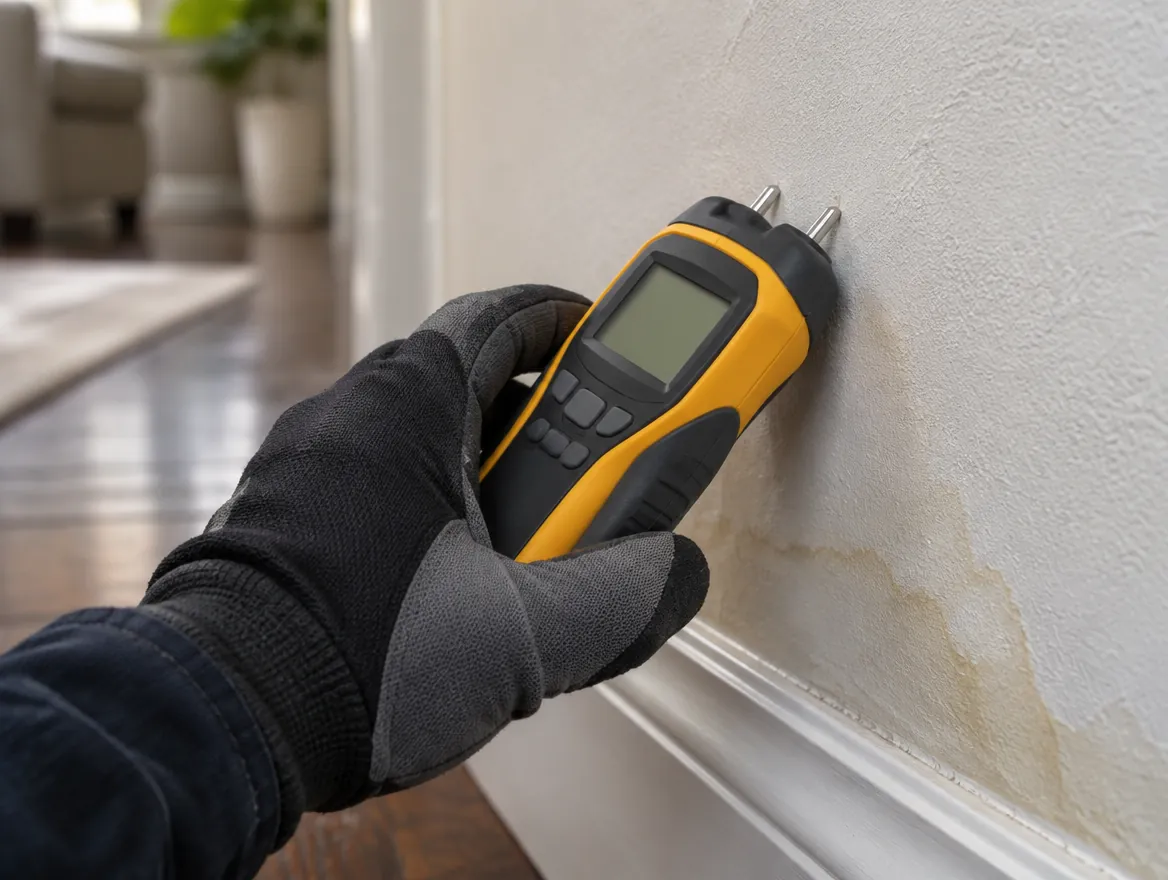
You don't always need a test. If you can see mold, the EPA says you don't usually need to know the exact type before removing it (EPA). An inspection is most useful when you can smell mold but can't find it, when you're buying or selling a house, or when you want proof the job was done right.
Call (616) 226-9528When an inspection makes sense
- A musty smell with no visible mold. It's often behind drywall, under flooring or in ductwork.
- After a leak or flood, to see how far the water spread.
- Before buying a house, especially an older one or one with a finished basement.
- After remediation, to confirm the area is clean (sometimes called clearance testing).
What an inspector does
A visual inspection, moisture readings with a meter, and sometimes a thermal camera to spot damp areas behind walls. Air or surface samples may be taken and sent to a lab. The report should say where the mold is, roughly how much there is, and what's causing the moisture.
Some homeowners prefer that the inspector and the company doing the removal aren't the same business. That's a fair choice, and you can ask for it when you call.
Common questions
Are home mold test kits worth it?
Not really. Mold spores are in almost every home, so a petri-dish kit nearly always grows something. It won't tell you where the problem is or how big it is.
How long do test results take?
Lab results for air or surface samples usually come back in a few days.
Can an inspection find mold inside walls?
Often, yes. Moisture meters and thermal cameras can point to damp areas behind drywall. Sometimes a small hole is cut to look inside.