Crawl spaces are dark, damp and out of sight, which is exactly what mold likes. Many West Michigan homes have one under an addition, a porch or part of the house next to a basement. A bare dirt floor gives off moisture all year.
Call (616) 226-9528Signs of crawl space mold
- A musty smell on the floor above, especially in summer.
- White, black or fuzzy growth on the floor joists and the underside of the subfloor.
- Insulation that sags or falls down.
- Standing water or wet soil after rain.
What the job involves
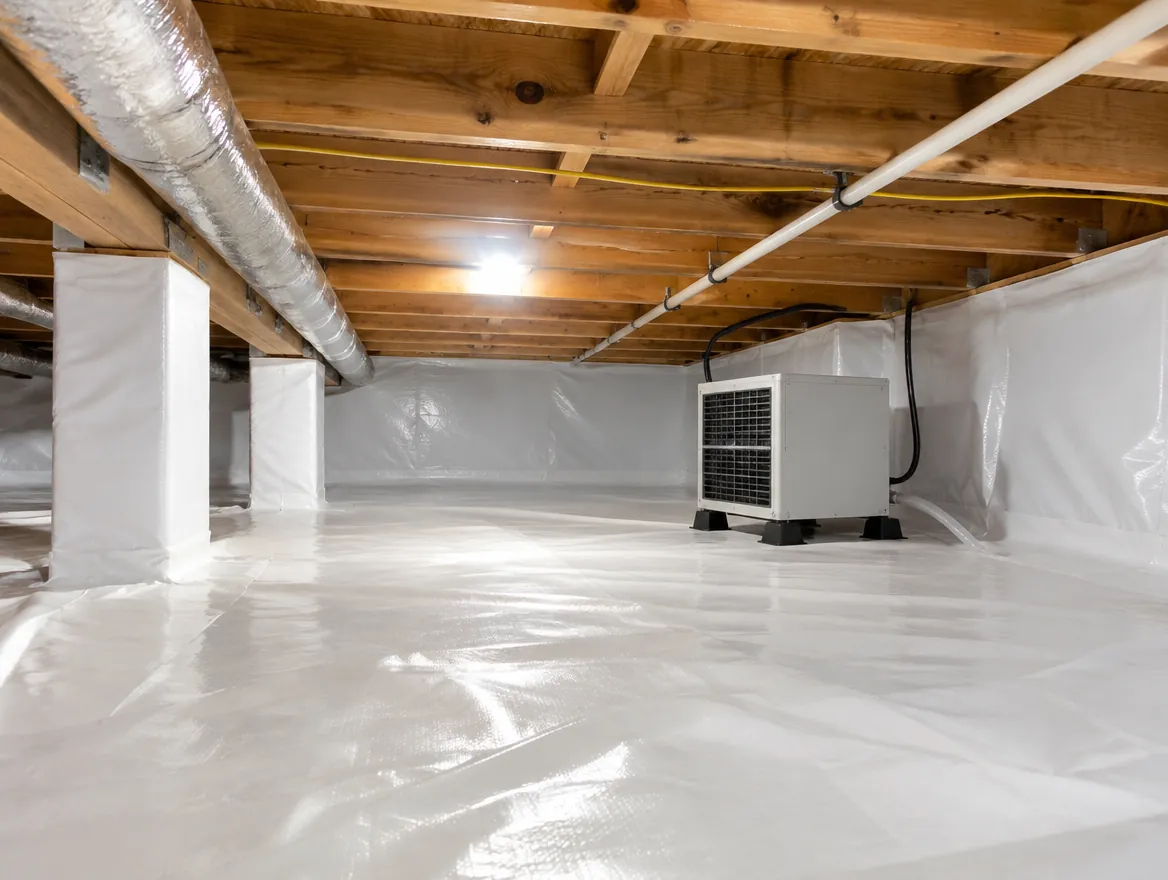
The contractor removes or treats the mold on the wood, takes out wet or moldy insulation, and dries the space. To keep it dry, most crawl spaces need a heavy vapor barrier over the ground, sealed vents or openings, and sometimes a dehumidifier. Drainage problems outside the house may also need fixing.
Common questions
Is the mold under my house affecting the air inside?
It can. Air moves up from a crawl space into the house through gaps in the floor, so crawl space mold and moisture often show up as a musty smell indoors.
What is crawl space encapsulation?
It means covering the ground and walls with a heavy plastic barrier, sealing it, and controlling the humidity, often with a dehumidifier. It keeps the space dry so mold doesn't return.
My crawl space is tiny. Can it still be done?
Usually, yes. Contractors work in tight spaces all the time. They'll tell you after a look whether access is a problem.